Tuesday, 21 May 2013

Bohemian Style - A Flashback into Fashion History

I have always had a penchant for all things boho. There is something eccentric yet romantically feminine about Bohemian fashion, the boho look is self-expression at its best and is totally timeless (you could even incorporate pieces from your mother’s closet!).

According to Wikipedia, the term ‘Bohemian’  “…is applied to people who live unconventional, usually artistic, lives”.The ‘Bohemian’ label was first given to the refugees of Central Europe. Their gypsy lifestyles did not conform to the bourgeois upper class.
In 1848 the word bohemianism was first coined by William Makepeace Thackeray in his novel “Vanity Fair”. In 1862, the Westminster Review described a Bohemian as "simply an artist or littérateur who, consciously or unconsciously, secedes from conventionality in life and in art".


The late 20th century saw the rise of Welsh model Dorelia McNeill. Dorelia lead a very Bohemian lifestyle. She lived in a caravan with two artist brothers Gwen John and Augustus John, and married the later. She was the muse for both the John brothers’ works and one of the notable pieces was by Gwen John entitled “Dorelia in a Black Dress”. This was painted while Gwen and Dorelia travelled France by foot. It portrays Dorelia in a simplistic style, whereas her portraits done by Augustus give her more of a gypsy vibe with colourful attire, scarves and beads.

In the early years of the 21st century, the Sunday Times thought it ironic that "fashionable girls wore ruffly floral skirts in the hope of looking bohemian, nomadic, spirited and non-bourgeois", whereas "gypsy girls themselves ... are sexy and delightful precisely because they do not give a hoot for fashion".
 
1909 – The Cross-Gender trend hit Paris with style icons like Colleen Moore and Louise Brooks donning cropped hair and pants.

1920-30 – This era saw a marriage of Bohemian with Shabby Chic. Winston Churchill’s niece Clarissa was a great follower of this trend.  

Around the mid 1920’s the Eton Crop hairdo was also gaining popularity. Jazz queen Jospehine Baker rocked this trend, and was known for her animal print dressing and dramatic accessories.


1944 – The post-war scenario diluted the colourful aspect of boho glam, and the bright prints, peasant skits and floral accessories were predominantly replaced with a more sober black. A style icon for boho black would be French actress and singer Juliette Greco. When she first performed outside Saint Germain in black trousers and golden sandals, she was astounded by the fan-following and later confessed that her style was a result of poverty: “When I was a teenager in Paris ... I only had one dress and one pair of shoes, so the boys in the house started dressing me in their old black coats and trousers. A fashion was shaped out of misery. When people copied me I found it a little ridiculous, but I didn't mind. It made me smile.” Performing in London over fifty years later, Gréco was described as "still ooz[ing] bohemian style.”[

1947 – Major fashion houses were starting to cash in on Bohemian style, and Dior came up with the “New Look” taking inspiration from bright colors that clashed with Parisian style sensibilities. The “New Look” came at a time when Europe and America were just beginning to fall back into normalcy post war. War time had pushed many women into the workforce and till then, clothing was more functional than luxurious.


1950 – The 1950’s gave us Brigette Bardot, a style icon we are still inspired by to date. The long tresses, the fringe, the black winged eyeliner still spell her magic even today.


1960 – The Bohemian lifestyle influenced the hippie (or ‘flower power’) movement of the ‘60’s the world over. The Greenwich Village gained popularity and singer Bob Dylan was quoted saying the Village was  "where people like me went - people who didn't belong where they came from … where the writers I was reading and the artists I was looking at had lived or passed through". This summed up the nomadic hippie lifestyle. Fashion got more colourful with the flower-power movement, and psychedelia was born. A notable boho chic of this era is Janis Joplin. She was seen in bright colours, romantic crochets, and tons of colorful jewelry. She even got her Porsche painted with psychedelic art.

1975 – Hippie fever was felt through the ‘70’s, and Freddie Mercury came up with “Bohemian Rhapsody”, a song I feel is a perfect translation of the free-spirited vibe of boho-chic.

-       Big Sis.

Monday, 13 May 2013

Who was Eva Braun?

Eva Anna Paula Braun was born in Munich on 6th Feb 1912 to a vocational school teacher of a middle-class family. Her existence would have been far less interesting if she hadn’t been linked to one of history’s most notorious tyrants, Adolf Hitler.

In 1929, when Braun was 17, she apprenticed at the "NSDAP Photohaus Hoffmann," a photography shop, on Amalienstrasse in Munich. Her boss, Heinrich Hoffmann, was Hitler’s official photographer, and this is how she met the infamous Nazi leader. She described him to friends as a "gentleman of a certain age with a funny moustache, a light-colored English overcoat, and carrying a big felt hat." Hitler on the other hand, 23 years Braun’s senior, was very attracted to the young blonde. According to Hoffmann’s daughter, the party leader charmed the teenager with snide Viennese charm:

“May I invite you to the opera, Miss Eva? You see, I am always surrounded by men, and so I can appreciate my good fortune when I find myself in the company of a woman.”
Dates at the cinema and restaurants followed. In 1931 the 19-year-old Eva wrote a letter to the Nazi Führer:

"Dear Mr. Hitler, I would like to thank you for the pleasant evening at the theater. It was unforgettable. I shall always be grateful for your friendship. I count the hours until the moment when we shall meet again ..."

Their relationship got more serious over time, and in 1932 Braun attempted suicide with her father’s gun in a bid to get the attention of the ever so busy Hitler. The timing was perfect as Hitler was aiming for the chancellorship, and it would have been the second suicide by a young woman that could have been tied to Hitler. His niece, Geli Rauball, was mysteriously found shot alone in her apartment, an apparent bid to escape from a possessive uncle. Hitler became attentive of Braun through her recovery, and by 1932 they had become lovers.  She often stayed overnight at his Munich apartment when he was in town.

Given Hitler’s rising power and fame, Braun was often left alone and felt neglected. When political guests came over, Braun was banished to her room and Hitler was once quoted saying in the presence of Braun that “a highly intelligent man should always choose a primitive and stupid woman.”


Braun photographed semi nude.
Although Hitler disapproved, he was often
not around to stop her.
On 1 April, 1935, she complained to her diary about a recent dinner at a hotel: “I sat near him for three hours and could not exchange a single word. By way of goodbye he handed me, as he has done before, an envelope with money in it. It would have been much nicer if he had enclosed a greeting or a loving word.”

Braun's second suicide attempt occurred in May 1935. She took an overdose of sleeping pills when Hitler failed to make time for her in his life. As a compromise, Hitler provided Eva and her sister with a three-bedroom apartment in Munich that August, and the next year the sisters were provided with a villa in Bogenhausen.

Hitler loved Braun in his own way. His will, revealed much later, placed her right at the top after the Nazi party, granting her a very generous GBP 600 a year for the rest of her life. He treated her well, but kept her in place where a woman should be, below men.

Braun’s importance in Hitler’s household was emphasized when she had a tiff with Hitler’s half-sister Angela Raubal (the dead Geli’s mother), and this lead to the dismissal of Angela from her position as housekeeper in the Berchtesgaden residence. This incident made Braun untouchable by the Hitler entourage then on.

By 1936, Braun was at Hitler's household at the Berghof near Berchtesgaden whenever he was in residence there, but she lived mostly in Munich. Braun also had her own apartment at the new Reich Chancellery in Berlin.

Their affair was always shield away from the public eye, and the clandestine nature of their relationship was done with a political calculation in mind. "Many women find me appealing because I am unmarried," Hitler believed. "It's the same thing with a film actor: When he marries, he loses a certain something among the women who worship him, and they no longer idolize him quite as much anymore." A vain comment, but the Nazi leader was quite correct in his judgment. Reinhard Spitzy, a staunch Nazi and employee of the former German ambassador to London, Joachim Ribbentrop, was astonished when a young woman with whom he was unfamiliar suddenly interrupted a conversation between Ribbentrop and Hitler at the Berghof, and said that the men should "finally" come to dinner. A colleague explained Braun's position to Spitzy, who was appalled. He had imagined Hitler as an "ascetic, above sex and passion." Instead, his hero was no different from anyone else.

History is still baffled over Braun and her life with Hitler. No other person can claim to have been as close to him, yet very little has been documented on her life. Many movies, novels and plays depict her as a dumb blonde who had the misfortune to fall in love with the devil, but Berlin historian Heike Görtemaker believes Braun has been wrongly portrayed. According to Görtemaker she was politically committed woman who won ­Hitler's affections, enjoyed a healthy sex life with him, sympathised with Nazi politics and gave him psychological support. Braun was fully aware of the twists and turns of Nazi policy-making and made no attempt to speak out against the Holocaust. Propaganda minister and Hitler confidant Josef Göbbels noted several times how much the dictator appreciated his mistress ("A clever girl, who means a lot to the Führer").

A woman’s place at the time did not allow for power and influence. Politics was not to be discussed in the presence of women. Instead, the topics of discussion were apparently fashion, dog breeding and operettas. Some believe this was actually a political tactic to save the women from the scrutiny of the allied forces. Braun might have had more influence on the face of German politics than we realize.

Braun was obsessively in love with Hitler, whom she fondly called ‘Wulf’. After Hitler survived a near-death experience, she sent him a love letter saying “From our first meeting I swore to follow you anywhere – even unto death – I live only for your love.” These words would prove to be a prophecy of things to come.

Hitler in turn appreciated her loyalty and was once quoted saying : "Only Miss Braun and my German Shepherd are loyal to me and belong to me," he is believed to have said near the end of the war.

On 30th April 1935 Hitler married his lover of 15 years in a small private ceremony. A few hours later, Hitler and Braun headed to the Fuhrer’s Bunker, Berlin and consumed cyanide. Eva Braun died first; Adolf Hitler followed 2 minutes later having had to shoot himself to speed up the process. They committed suicide, a death they desired over one in the hands of the allied forces.
Their bodies were discovered before the allied troops got to them, and were doused in gasoline and burnt. However, the Soviet troops managed to take possession of the corpses before they were cremated and they were carried by road to Magdeburg. The long journey meant the bodies were carried by day, buried at night, and again unburied the next morning to continue the leg of the journey. They were buried in Magdeburg for 25 years, and were later uncovered again in 1970 to be fully destroyed. A gruesome ending to what might have been a very ordinary love story. It is believed that Hitler tried to save Braun from this fate and was coaxing her to leave Berlin during the final days, but she stuck to her promise and stayed by his side till the end.

Was Eva Braun really just a naïve blonde who fell for the graces of a sophisticated mass murderer? A quote by Braun makes me believe otherwise; “Better 10,000 others die than he (Hitler) be lost to Germany”. She was indeed the perfect bride for Hitler.

There was no forensic backing to confirm the corpses were indeed Hitler and Braun. Many believe this was a distraction tactic, and the two escaped to a new life. Some endings remain a mystery and are lost in the pages of history.

-          Big Sis

Sunday, 12 May 2013

Shoe Shopping For Dummies

I am a total shoe addict. If I had an unlimited budget (and a mansion just for shoe storage) I could easily compete with Carrie Bradshaw. However, as I’ve grown older (and entered mummy-hood) my choice of shoes have swayed significantly towards more comfortable, sensible shoes as opposed to my dramatic over-the-top, ‘hard to walk in’ collections of the past.

I spent a considerable time this weekend cleaning out my shoe rack, bid a tearful farewell to a few well-worn friends, and put aside a few that I had bought spontaneously and had never gotten around to wearing. I also reviewed the pairs I tend to wear more often than others, and the list included:

-          My FitFlops. They are worth every penny spent, these are ah-mazing on the feet no matter how long your mall stroll ends up to be! They say the only issue with FitFlops is that you won’t want to wear anything else after you’ve owned one. Totally true, but pity we can’t get away with these at work!


-          My black Mary-Janes. I got these from Naturalizer, so they have their patented comfort padding inside. They also have wedge heels for more support and comfort. These are my go-to shoes for work and when I need to be heeled and also need to carry off the distance.


-          My beige pumps. I think every girl should own a pair of beige, or skin-coloured pumps. They go with everything and visually add length to your legs. My black pumps look pretty much the same apart from the colour. Black also goes with everything and is perfect for work and other formal settings.
 

-          My kolhapuris. I’ve always wanted a pair, and finally got these on my last trip to India last October. They are made of calf leather, are flat and very comfy. They add an ethnic touch to any attire, and are a great way to show off a summer pedicure.


-          My turquoise ballerinas. These leather flats from Naturalizer are super comfy and the texture looks like snake skin. They add a funky vibe to an outfit and I love the burst of colour.


-          My beige wedges. Once again, the beige colour goes with everything and adds the illusion of height. Wedge sandals are great for the summer months and I like to wear these with skirts and maxi dresses to add on to the boho feel.


-          My gladiator sandals. These flats are super comfy and look great for a casual day out.


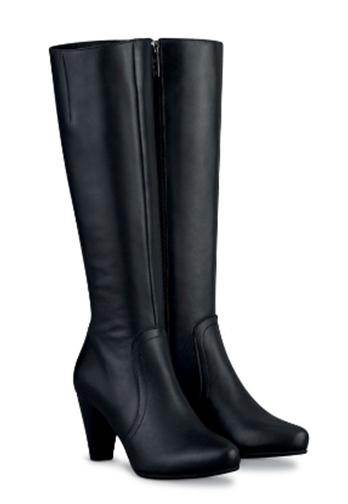
-          My knee-high black leather boots. I’ve had these for ages, and they were definitely worth the investment. It’s getting too hot here to wear these now, but black boots with a little heel adds oomph to any attire.

When making a list of must-have shoes, keep your lifestyle in mind:
-          Do you live in a colder or warmer climate? (This will help you decide how many boots you need as opposed to sandals).

-          Where do you work? The degree of formality expected in your work attire will determine if you need to invest more in classic pieces or if you have the flexibility to buy more trendy colourful numbers.

-          Your comfort level. If you are not comfortable in heels, save your money (and feet) and look out for wedge heels and flats. Also invest in shoe cushions. There’s a whole array of gel shoe inserts available in the market today. Experiment what feels best for you. Your choice of shoe inserts might also vary per shoe.

-          Your personal style. Are you a classy or funky chic? Do you prefer timeless pieces or enjoy experimenting with trends and colours? Or are you a boho chic like to add a romantic vibe to your attire with ethnic-inspired pieces like kolhapuris? Every girl should have a few classic pieces, but you can let your individuality shine through by choosing from an array of styles out there.

In my opinion, every girl should own:

-          A pair of black pumps.

-          A pair of beige/skin colored pumps

-          A pair of FitFlops

-          A pair of wedge heel sandals

-          A pair of boots (in either black or natural brown leather)

-          Ballerina flats

Once you’ve ticked off the above, you can invest in:

-          A pair of pumps in a trendy color. Red pumps look great with jeans.


-          Gladiator flats or lace-up heels. This style has a gothic vibe to it, and has been around for a while now. It adds a dramatic edge to any outfit.

 
-          Nothing beats leather shoes. They stand the test of time, are easy to maintain with regular polishing, and are comfortable and stylish too. Once you have a few, you can experiment with different textures such as suede and fabric. Suede looks lovely, but can be hard to maintain.

-          Trainers. If you are the sporty type or go for long walks, by all means invest in the right shoe gear. For me, my FitFlops suffice.

-          Kolhapuris or Mojaris. These are very traditional Indian footwear, and add a vibrant ethnic edge to an outfit. Be experimental and don’t limit these to ethic clothes. Wear them with denims, a gypsy skirt, or harem pants.
 

-          Sky-high heels (height depending on your comfort level, and skill of balance!) because there’s no arguing that heels always look hot! Save these for special occasions though. Pay heed to the excerpt below:


-          Big Sis.